NZ GLP-1 hub · Movement · 4 November 2026 · Peer-reviewed
The deadlift
A general training feature, not a plan. Talk to a physiotherapist or qualified trainer before starting any new exercise.
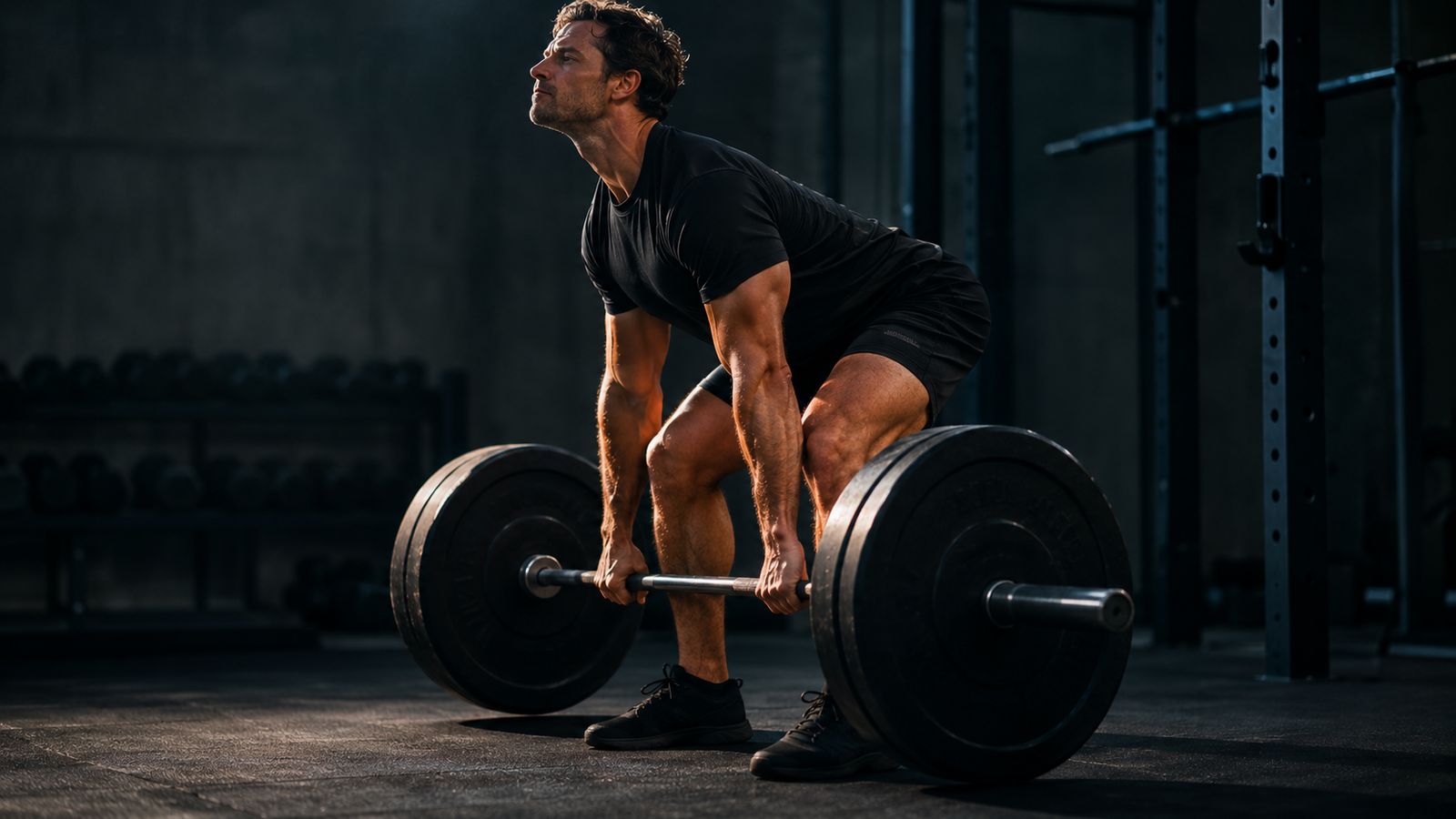
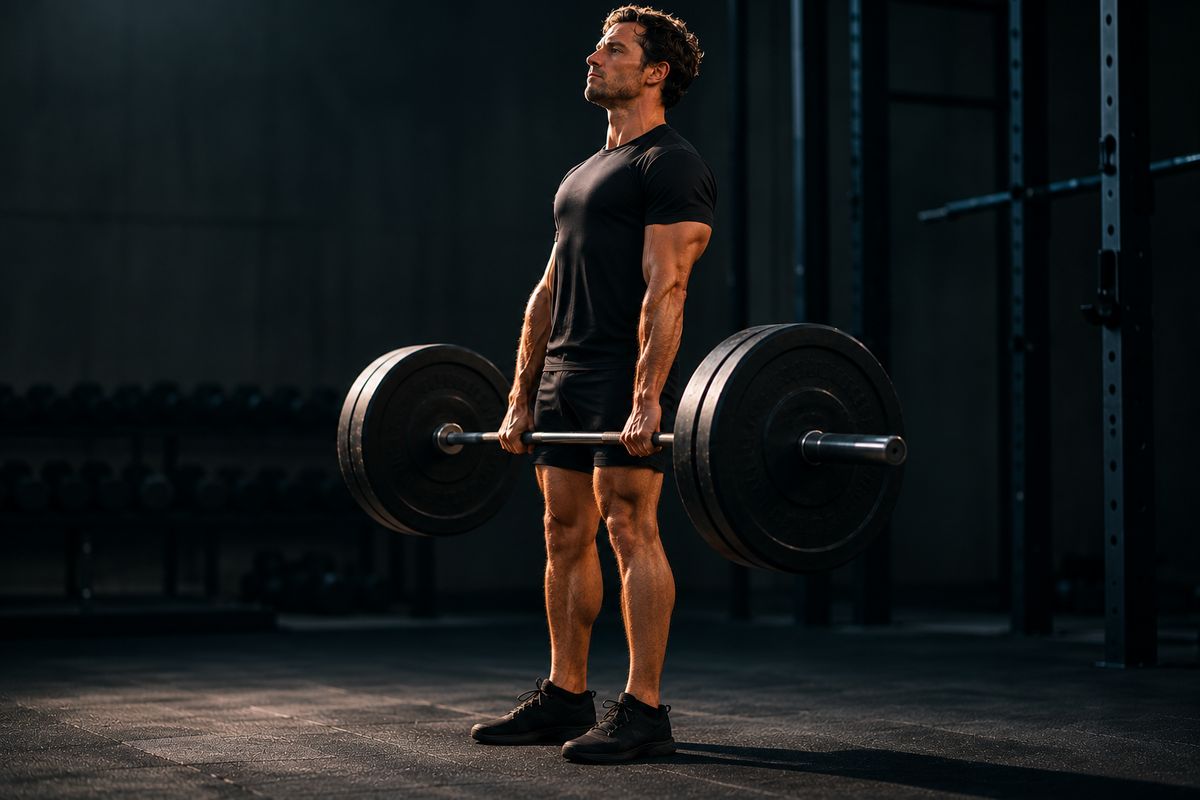
The deadlift is picking something heavy up off the floor with a straight back and putting it down again. That is the whole movement, and it is also one of the most useful things a body can learn to do, because it is the pattern behind lifting a suitcase, a child or a bag of potting mix.
What it trains
- →The back of the body: hamstrings, glutes and the muscles along the spine, working together as a hinge at the hips.
- →The grip and forearms, which hold the weight.
- →The trunk, which keeps the spine in position while the hips do the work.
It is a compound movement, meaning several large muscle groups work at once. That is why it appears in nearly every resistance-training protocol used in trials of weight loss.
Why it comes up in the lean-mass research
Trials that add resistance training to a calorie deficit consistently show less lean mass lost than diet alone; a 2018 meta-analysis in older adults with obesity found resistance training largely prevented the lean-mass loss seen with calorie restriction. These trials used full-body routines built on compound movements, and a hip hinge of some kind is almost always one of them. The research supports the category, not this exact lift: the evidence is for progressive resistance training as a whole. Our guide to strength training during weight loss sets out those principles, and is the weight you're losing fat? covers what the GLP-1 trials measured.
Where to start
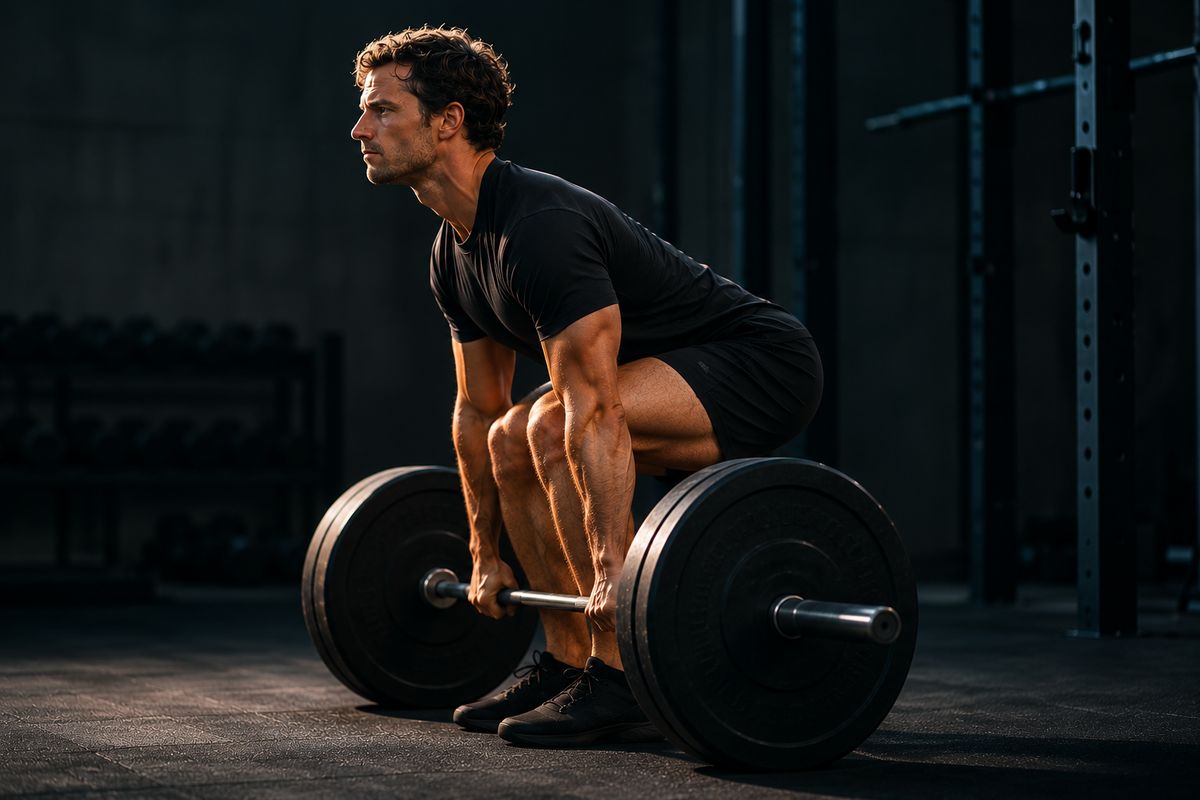
- →With a coach, if you can. Twenty minutes with a physiotherapist or a qualified trainer to learn the hinge is worth more than any article.
- →With a light object and a high start. A kettlebell on a box, or a pair of dumbbells from mid-shin, teaches the pattern without asking the floor of you on day one.
- →With the hinge before the lift. Push the hips back, keep the shins close to vertical, let the chest come forward with a long spine, then stand up by driving the hips through. If the back rounds, the weight is too heavy or the start is too low. Working through the full range you can control, rather than a shortened one, is what the range-of-motion research supports for building strength and muscle.
- →With patience on a reduced-calorie intake. Fatigue is real; a short session done well beats a long one done tired.
Safety and sense
Stop if you feel sharp pain, pins and needles, or pain that travels down a leg, and see a physiotherapist or your doctor. Mild muscle soreness a day or two later is normal; joint pain is not. If you are new to exercise, pregnant, or have a condition affecting bone, heart or blood pressure, check with your doctor before starting.
What this feature isn't
It isn't a plan. We don't give loads, sets or repetitions, because the right amount depends on you and is best set with someone who can see you lift. Next month: the squat.
Sources
- Sardeli AV et al. — Resistance training prevents muscle loss induced by caloric restriction in obese elderly individuals: a systematic review and meta-analysis (Nutrients) · 2018-03-29
- American College of Sports Medicine — Progression models in resistance training for healthy adults (position stand, Med Sci Sports Exerc) · 2009-03-01
- Pallarés JG, Hernández-Belmonte A, Martínez-Cava A et al. — Effects of range of motion on resistance training adaptations: a systematic review and meta-analysis (Scand J Med Sci Sports) · 2021-10-01
Review: Founder review via PR merge. Principles only; no loads, sets or repetitions; the standing line renders from lib/series.ts.
The NZ GLP-1 Brief
GLP-1 news for New Zealand, every month
Medsafe and Pharmac decisions, new trial results, and what each one means here. Checked against primary sources. Free, and you can unsubscribe in one click.
We’ll email you a link to confirm. We use your email only to send this newsletter. We never share it with advertisers or social media platforms. See our privacy policy.
Recomp Health does not prescribe, supply or recommend any medication. This is independent editorial content — educational information, not medical advice. Talk to a qualified health professional before starting, changing or stopping any medication.