NZ GLP-1 hub · Movement · 5 November 2026 · Peer-reviewed
Movement of the month: the overhead press
A general training feature, not a plan. Talk to a physiotherapist or qualified trainer before starting any new exercise.
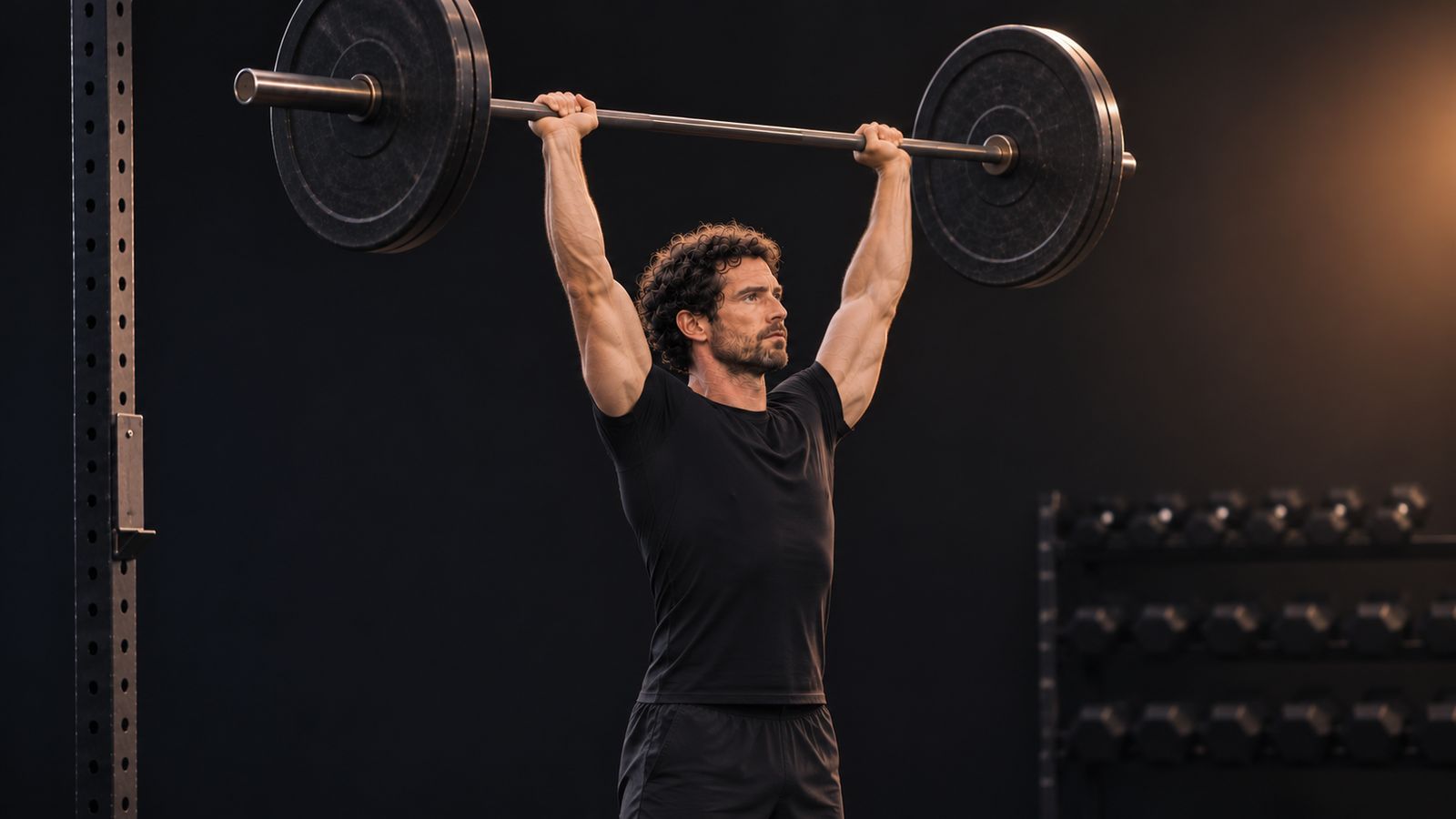
Lifting something onto a high shelf, putting a bag in an overhead locker, holding a child up: the overhead press is that movement, standing, with a bar. You press from the shoulders to straight arms overhead while the rest of the body holds still.
What it trains
- →The shoulders (deltoids) and the triceps, which push the bar up.
- →The upper back, which stabilises the shoulder blades overhead.
- →The trunk and glutes, which stop the body leaning back under the weight.
Why it comes up in the research
Full-body resistance programmes in weight-loss trials include a vertical or horizontal press for the upper body. The standing overhead press asks the trunk to work as well as the arms, which makes it a good all-round upper-body movement. The evidence supports the category of progressive resistance training rather than any single lift, and the lean-mass evidence is the same as for the rest of the series.
Where to start
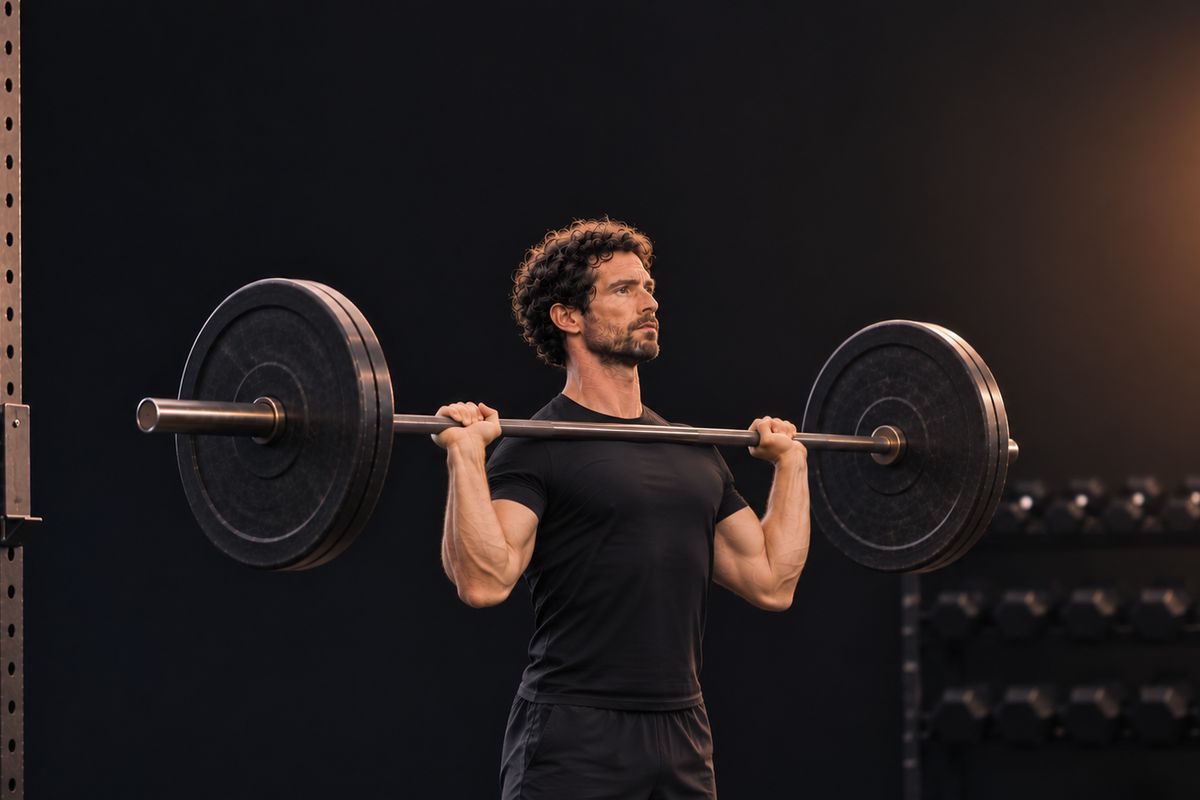
- →With a coach, if you can. Shoulder history matters more here than in any other lift in the series.
- →With dumbbells, seated. A seated dumbbell press takes the balance and lower back out of it while you learn the path.
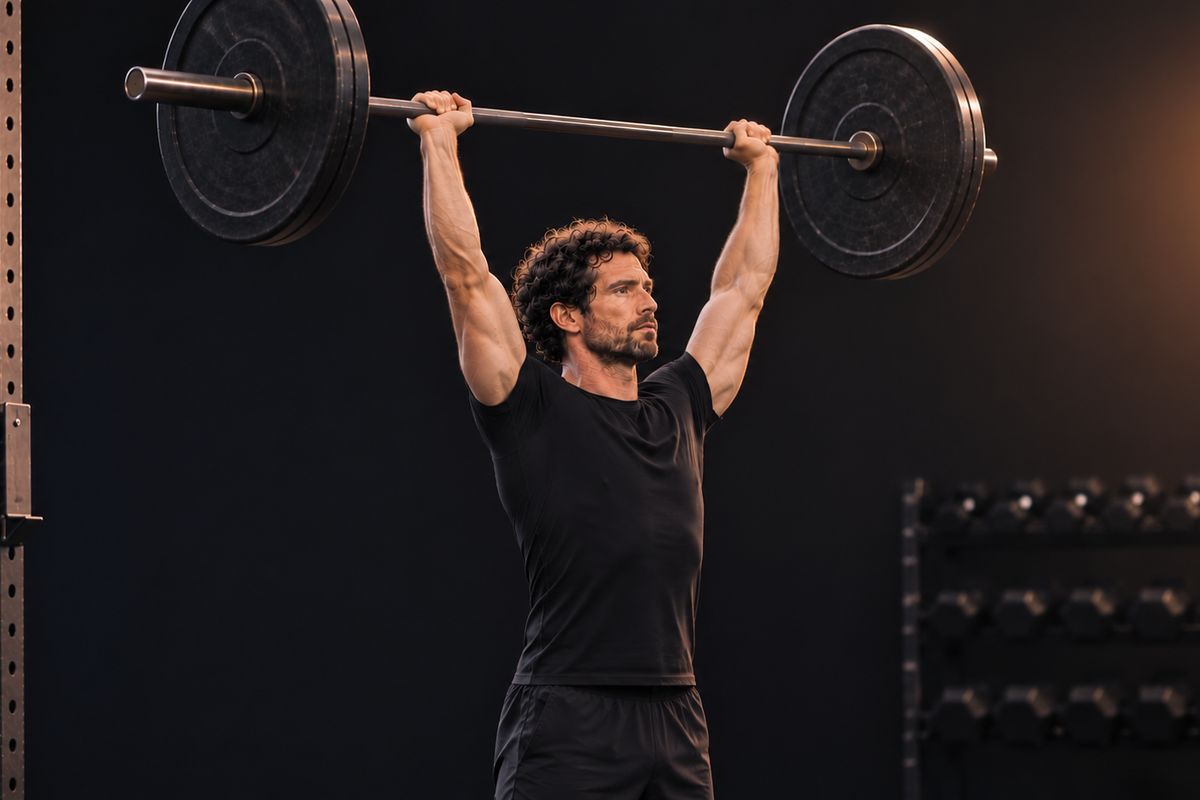
- →With a straight path. Move your head back slightly to let the bar pass your face, then bring it "through the window" so the bar finishes over the middle of the foot.
- →Without leaning back. Squeeze the glutes and keep the ribs down. If you have to lean back to finish, the weight is too heavy.
Safety and sense
Stop if you feel a pinch or sharp pain in the shoulder, or pain that travels down an arm. People with a shoulder injury, rotator-cuff problems or high blood pressure should check with a physiotherapist or doctor before pressing overhead.
What this feature isn't
It isn't a plan. We don't give loads, sets or repetitions. Next in the series: the bench press.
Sources
- American College of Sports Medicine — Progression models in resistance training for healthy adults · 2009-03-01
- Sardeli AV et al. — Resistance training prevents muscle loss induced by caloric restriction in obese elderly individuals: a systematic review and meta-analysis (Nutrients) · 2018-03-29
Review: Founder review via PR merge. Principles only; no loads, sets or repetitions..
The NZ GLP-1 Brief
GLP-1 news for New Zealand, every month
Medsafe and Pharmac decisions, new trial results, and what each one means here. Checked against primary sources. Free, and you can unsubscribe in one click.
We’ll email you a link to confirm. We use your email only to send this newsletter. We never share it with advertisers or social media platforms. See our privacy policy.
Recomp Health does not prescribe, supply or recommend any medication. This is independent editorial content — educational information, not medical advice. Talk to a qualified health professional before starting, changing or stopping any medication.